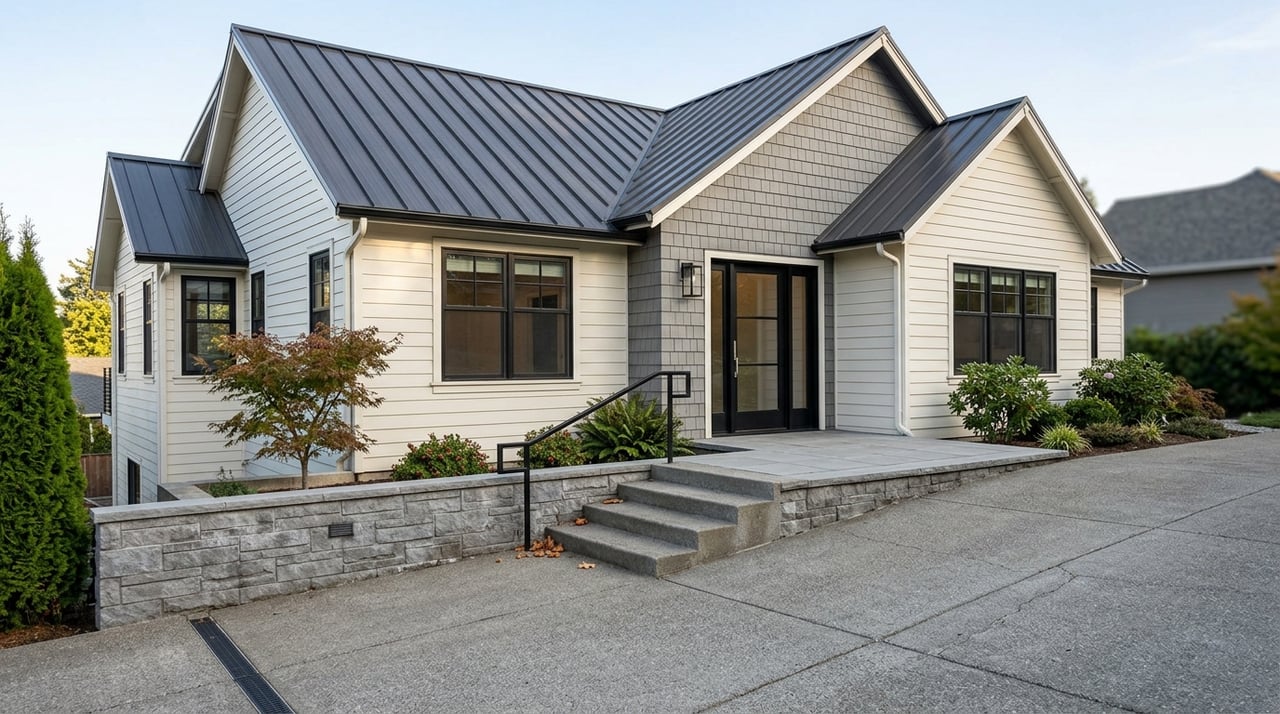
Homebuyer’s Overview of Living in Oregon City
June 4, 2026
June 4, 2026
If you want a Portland-area suburb with real history, varied housing, and everyday convenience, Oregon City deserves a close look. For many buyers, the challenge is figuring out whether its hills, older homes, and distinct pocket neighborhoods fit the way they want to live. This overview will help you understand what makes Oregon City different, what tradeoffs to expect, and how it compares with nearby options so you can search with more clarity. Let’s dive in.
Oregon City has a stronger sense of place than many suburbs. As the county seat of Clackamas County and the first incorporated city west of the Rocky Mountains, it carries a visible historic identity that still shapes how the city looks and feels today.
The city is built across three terraces, rising from about 50 feet above sea level near the riverbank to more than 250 feet on the upper terrace. That topography creates a more layered experience than you will find in flatter suburban communities, with a mix of river-level streets, bluff areas, and upper-terrace neighborhoods.
Oregon City’s 2025 population estimate is 38,175, which gives it a solid middle-ground scale. It feels larger and more varied than Gladstone, but generally less expensive than West Linn based on current Census home values.
For many buyers, the biggest story in Oregon City is housing variety. Early development clustered near the falls and original business center on the lower terrace, while later growth moved up the bluff and onto the upper terrace.
That means your home search may include very different options within the same city. You may tour older homes closer to the historic core, then see newer construction or more conventional suburban layouts farther up the terraces.
This split is one of Oregon City’s defining features. If you like character and history, the lower areas may appeal to you. If you want a newer layout or a more contemporary neighborhood feel, upper-terrace areas may be a better fit.
Oregon City is not one uniform housing market. The city has 12 active neighborhood associations, which is a helpful reminder that buyer experience can change a lot from one area to another.
Some streets feel older, more compact, and more connected to the original city layout. Others feel more suburban, with a different rhythm and housing style. That local variation is important when you compare homes, prices, and daily convenience.
Downtown Oregon City has a historic feel, but it is not currently designated as a historic district. Instead, the city maintains historic-resource maps for the McLoughlin Conservation District, the Canemah National Register District, and landmarks outside historic districts.
If you are considering an older or designated property, it is worth knowing that some exterior alterations require review. For buyers who love architecture and heritage, that may be part of the appeal. For others, it is simply something to understand before making an offer.
According to the 2025 Census estimate, the median owner-occupied home value in Oregon City is $555,800. That places Oregon City in a middle position among nearby west-metro choices highlighted in the research.
West Linn shows a median owner-occupied value of $770,200, while Gladstone comes in at $480,700. In practical terms, Oregon City may appeal to buyers who want more variety and a stronger historic identity than Gladstone, but who are looking for a lower price point than West Linn.
Of course, individual home values vary by location, age, condition, lot, and updates. Still, this broader comparison helps frame Oregon City as a middle-ground option in the area.
Oregon City offers a mix of civic amenities, parks, trails, and river access that support day-to-day livability. The city maintains more than 250 acres across 26 park sites, which gives buyers a meaningful range of outdoor spaces to use regularly.
Notable amenities include two boat launches, the Carnegie Center and Spraypark, Clackamette Cove Trail and River Access Trail, End of the Oregon Trail, McLoughlin Promenade, the swimming pool, and Pioneer Community Center. These features help create a lifestyle that feels active and connected to the landscape.
The city’s trails planning also treats trails as everyday infrastructure, not just recreation space. That includes connections for reaching parks, the library, and the Willamette and Clackamas river corridors.
Oregon City has some walkable pockets, especially around older parts of town and downtown. The city allows parklets and sidewalk seating and sales downtown and along the 7th Street corridor, which points to a modest active core rather than a purely car-oriented commercial strip.
At the same time, walkability is not the same everywhere. Because of the city’s growth pattern and terrain, some areas feel older and more compact, while others feel more spread out and suburban.
The city’s own transportation system reflects that reality. Public infrastructure includes roads, sidewalks, bike paths, public stairways, and even the Municipal Elevator, which was created to help residents move between the lower and upper levels of the city.
One of the most important things to understand before buying in Oregon City is that the terrain is not just a backdrop. It affects how neighborhoods feel, how streets connect, and how you move through the city day to day.
For some buyers, the hills, bluff areas, and elevation changes add charm and visual interest. For others, steeper grades may be something to consider more carefully, especially if you want easier walking routes or simpler daily access.
This is one reason in-person neighborhood touring matters so much in Oregon City. Two homes with similar price points may offer very different lifestyle experiences depending on where they sit within the city’s terraces and street network.
Oregon City offers practical regional access, but its transit system is more bus-centered than rail-centered within the city. The Oregon City Transit Center at 1035 Main Street connects to TriMet routes 31, 32, 33, 34, 35, 76, 79, and Canby Area Transit.
Route 79 connects Oregon City Transit Center and Clackamas Town Center along I-205 and Main Street. That gives residents a workable transit option, especially for bus users, but the city does not function like a rail-based commute hub.
For drivers, Oregon City is served by key regional roadway facilities including I-205, OR 213, and OR 99E. The city also notes 12 miles of state roads within its transportation network.
The mean travel time to work is 26.5 minutes. Compared with nearby communities in the research, that is a bit longer than West Linn at 24.3 minutes and Gladstone at 23.1 minutes, but still within a range many buyers find manageable.
If you are trying to choose between nearby suburbs, Oregon City often stands out as the middle-ground option. It blends more housing diversity and historic character than Gladstone, while typically offering a lower median owner-occupied value than West Linn.
Here is a simple side-by-side snapshot:
| City | 2025 Population Estimate | Median Owner-Occupied Value | Owner-Occupied Rate |
|---|---|---|---|
| Oregon City | 38,175 | $555,800 | 65.3% |
| West Linn | 26,597 | $770,200 | 82.7% |
| Gladstone | 11,898 | $480,700 | 64.6% |
West Linn may appeal if you are prioritizing a higher-end price band and that city’s specific housing profile. Gladstone may appeal if you want a smaller, more compact city with a lower median home value. Oregon City often works well if you want a broader mix of housing ages, neighborhood types, and a stronger sense of historic identity.
Oregon City can be a strong fit if you want more than a standard suburban grid. Buyers who appreciate historic streets, housing variety, river access, parks, and a city with visible local character often find a lot to like here.
It can also work well if you want options. You may be able to choose between older homes closer to the core and newer homes farther up the terraces, depending on your budget and lifestyle goals.
The main tradeoffs are also clear. You should expect topographic variation, mixed housing ages, and possible preservation-related review for certain designated historic properties.
When you tour Oregon City, it helps to focus on a few practical questions:
These questions can help you narrow your search faster. In Oregon City, micro-location matters as much as the city itself.
If you are weighing Oregon City against West Linn, Gladstone, or another nearby suburb, a side-by-side strategy is often the most helpful approach. Looking at all three through the lens of price, setting, commute, and housing style can make your decision much clearer.
If you are thinking about buying in Oregon City or comparing it with nearby communities, Monaghan Real Estate Group can help you make sense of the options with clear guidance and local insight.
West Linn Real Estate
Just Listed
We truly would like to see how we can help you attain your real estate goals. It is our passion to help people whether it’s meeting an immediate need or helping create a long-term plan. We look forward to meeting to discuss your goals to create a customized plan for you. Please contact us today so we can be in touch straight away.